What is Spain best at in the world?
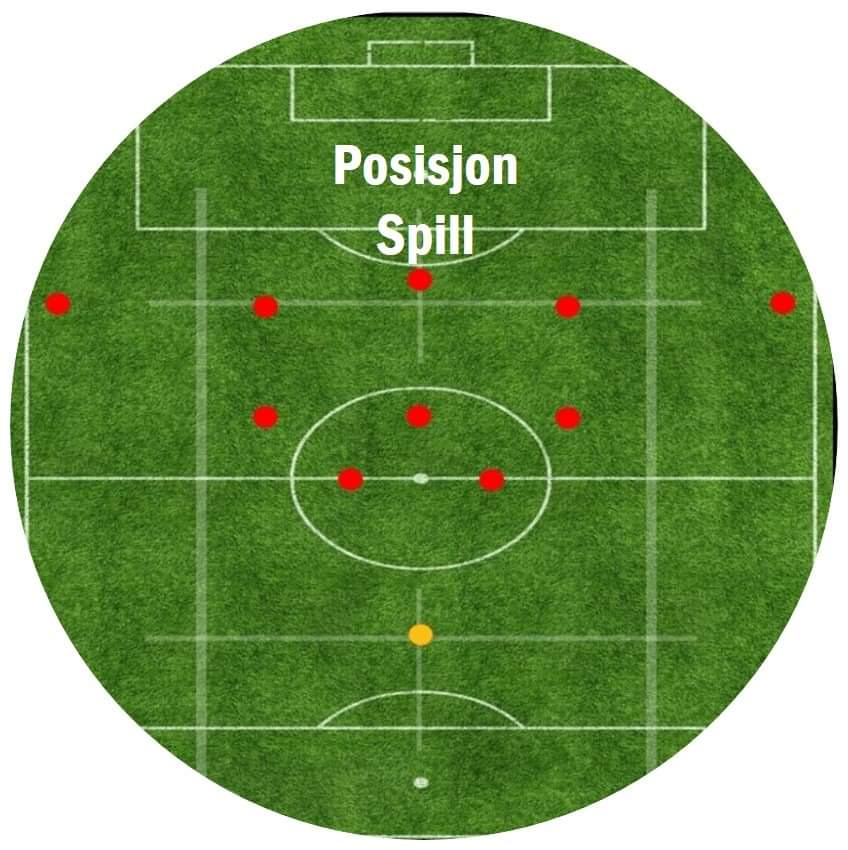
They master "Dynamic Spaces" like no other.
During a football match, there is constant interaction between the ball carrier and the players who are closest and further away.
In positional play, it is crucial that the players understand the importance of this interaction.
The players who are closest to the ball carrier have the main task of solving problems together with the ball carrier, but those who are further away help the collective game develop by holding their positions.
This is a significant difference between traditional game models and positional play.
The players are therefore highly involved even when they do not have the ball.
The different elements in the game that players must have a conscious relationship with are, BALL, TEAMMATE, OPPONENTS AND SPACE.
A study from 2013 shows that there are big differences between what the better players focus on and those who are not so good.
In Spain, they talk about something called Socio affective stage spaces. This has to do with the relational distances between the players. These spaces do NOT refer to physical areas on the field. There are specific zones on the field depending on the position of both teams' players and in relation to the ball.
An ideal situation for the ball carrier would be to have many teammates in the zone called Mutual assistance. Organized in such a way that they provide alternatives/passing lines to the ball carrier. In addition to players in the zone called Cooperation zone, even though these cannot help the ball carrier directly. But in cooperation with other teammates, they create space and tie up opponents.
This is what Spain does better than any other team in the world. When you get these concepts in place, I would say that you see the game in a different way. So, what should players and coaches really look for out on the field?
The ball is like a magnet, both for your own players and opponents. The fans are the only ones who should look for the ball. The coaches must look elsewhere to get the information they need. And to complicate it even more……Seeing is different from observing!
During a match, there is constant interaction between the players who are close to the ball and those who are far away from the player who has the ball. In positional play, it is a key skill to understand the continuous interaction between the players in the immediate vicinity and those who are farthest from the ball carrier. There is a general understanding that those who are closest to the ball carrier are responsible for solving the ball carrier's problems in the immediate area. While those who are far away contribute to the collective game, precisely by keeping their positions far away.
Watch Spain's next match and experience this dynamic yet organized control. It's not about physics. It's not about speed. It's not about technique either. It's about a game idea, which has been implemented for generations.


Kommentarer